
No, machine learning experts aren’t always strictly required for basic generative AI projects, but they’re essential for business-critical implementations that deliver measurable ROI. Simple use cases, such as generating blog content or basic chatbots- can often utilize off-the-shelf tools without requiring deep expertise.
However, when generative AI powers customer experiences, revenue decisions, or operational systems, a lack of machine learning knowledge leads to 40-60% failure rates due to poor performance, compliance issues, or inadequate scalability. The real question is whether your project can tolerate generic results or needs production-grade reliability.
This guide explains when machine learning experts add value, what they contribute to generative AI success, and how businesses make smart decisions about expertise needs.
Generative AI creates new content, text, images, code, or data, based on patterns learned from training examples. Tools like ChatGPT, DALL-E, and Midjourney represent consumer-facing versions, but business applications require customization.
Common business uses include:
While basic implementations seem simple, achieving reliable, scalable results demands understanding how these systems actually work beneath the surface.
For early-stage exploration, basic generative AI tools suffice:
Success rate for these use cases exceeds 80% without specialized expertise because expectations remain modest and manual review catches imperfections.
Internal tools for non-customer-facing tasks often work adequately:
These applications tolerate occasional inaccuracies since humans verify outputs before action.
When generative AI interacts directly with customers, quality becomes non-negotiable:
Without machine learning expertise, customer-facing AI fails 50% more often due to hallucinations (confident, incorrect information), brand inconsistency, or poor user experience.
Businesses scaling generative AI across operations need:
Enterprises report 3x higher ROI from generative AI projects with machine learning oversight compared to those without.
Off-the-shelf tools handle generic tasks, but business differentiation requires customization:
These advanced implementations demand machine learning fundamentals.
Experts assess when pre-trained models suffice versus requiring customization. They implement Retrieval-Augmented Generation (RAG), combining AI with your specific data sources—for 30-50% accuracy improvements.
Machine learning professionals:
Critical for regulated industries:
Compliance failures cost businesses millions—expert oversight prevents these risks.
Experts connect generative AI to business systems:
Marketing Agency: Without expertise, AI-generated content required 50% rewriting. ML-optimized system delivers 90% ready-to-publish copy, scaling production 4x.
E-commerce Platform: Generic chatbot frustrated customers. Fine-tuned model with expert oversight increased satisfaction 28% and reduced support volume 35%.
Healthcare Startup: Basic AI summaries missed clinical accuracy. ML expert implemented verification reducing errors from 25% to 3%, enabling regulatory approval.
Fintech Company: Fraud detection AI had 15% false positives. Expert optimization cut this to 2%, saving $2.5M annually in investigation costs.
These examples demonstrate 3-5x ROI multipliers from proper machine learning guidance.
Low impact (internal tools, prototyping): Proceed without dedicated expertise, budget for manual review.
High impact (customer-facing, revenue-generating): Invest in machine learning guidance from day one.
Off-the-shelf sufficient: Basic content generation, simple chatbots.
Customization required: Industry-specific language, private data integration, multi-modal systems.
If your team lacks data science experience, external expertise accelerates success dramatically. Companies without internal AI teams report 4x faster time-to-value using specialist guidance.
Organizations increasingly use platforms like Workflexi to connect with vetted machine learning experts for generative AI projects. This approach provides production-grade expertise without permanent hiring overhead, enabling rapid capability building.
Generative AI democratizes advanced capabilities, but business success requires bridging the gap between consumer tools and enterprise reliability. Machine learning experts aren’t required for casual experimentation, but they’re indispensable for applications where performance directly impacts revenue, customers, or compliance.
Need machine learning expertise for your generative AI project? Workflexi connects businesses with proven ML specialists experienced in production generative AI deployments. From fine-tuning to scaling, our experts deliver the reliability your business requires. Explore Workflexi’s machine learning talent network and accelerate your AI success today.
No, basic prototyping and low-stakes internal tools often don’t require experts. However, customer-facing, revenue-generating, or regulated applications demand ML expertise for reliability and compliance.
They fine-tune models for accuracy, implement safety safeguards, optimize performance and costs, integrate with business systems, and monitor production quality—ensuring AI delivers business value consistently.
Yes, for simple applications using off-the-shelf tools. However, achieving production-grade results requires either internal expertise or external guidance to avoid common pitfalls like inaccuracies and poor scalability.
Freelance ML experts typically charge $80-$200/hour or work project-based. Most businesses recover this investment within 2-3 months through improved AI performance and reduced manual effort.
Poor quality outputs reaching customers, compliance violations, wasted API costs, and scalability failures. 40-60% of unsupervised AI projects fail to deliver expected business value.
Immediately, if AI powers core product features, customer experience, or revenue decisions. For experimentation, delay until validating business potential.
They implement verification systems like Retrieval-Augmented Generation (RAG), fact-checking loops, and confidence scoring—reducing confident incorrect outputs by 70-90%.
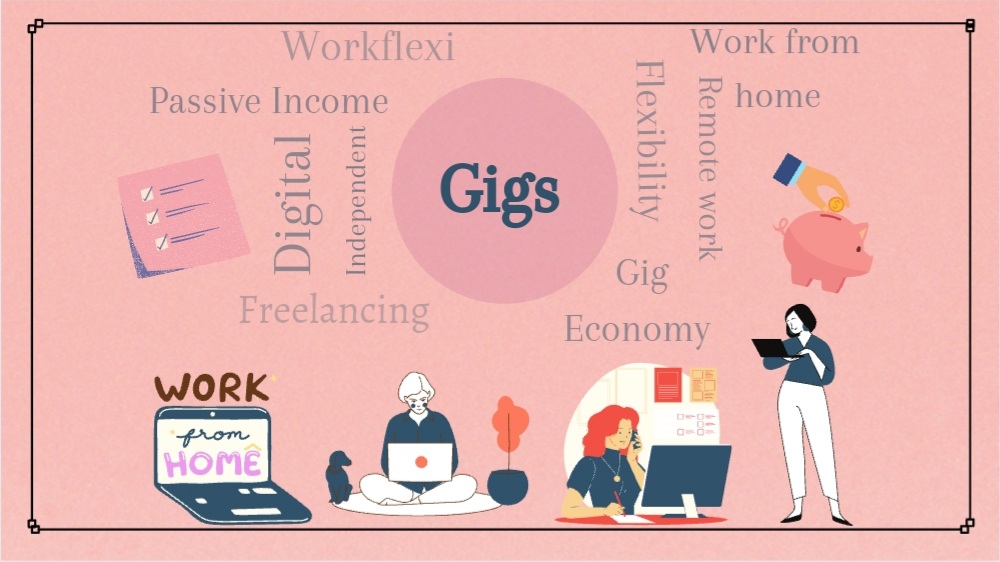
Why Take Up Gigs/Part-time Jobs Alongside Your Full-time Job? The job market is constantly changing and evolving. People are prioritizing their financial stability and independence over everything. The previous culture of hustling and putting in more and more hours every…

Prompt engineering for business is the practice of designing, testing and improving the instructions, context and output formats given to an AI model so it performs a specific business task reliably. A prompt engineer defines what the model should do,…

What skills does a generative AI developer need? In short: solid Python programming, experience with large language model (LLM) APIs, retrieval systems such as RAG, the ability to build AI agents and tool integrations, and the discipline to test and…

A Java developer can build the software that runs behind many business systems: web applications, APIs, enterprise platforms, e-commerce backends, and microservices. If you are planning a project and wondering whether Java fits, this guide explains what Java is used…