

The simple answer is: Prompt engineer experts are professionals who specialize in designing effective instructions (prompts) for AI systems like ChatGPT, Claude, and Gemini to produce optimal outputs. According to LinkedIn’s 2025 Jobs Report, roles in AI prompt engineering have increased by 400% year-over-year, making it one of the fastest-growing careers in technology. With salaries ranging from $90,000 to $250,000 annually and demand expected to exceed 200,000 professionals by 2026, prompt engineering represents a critical bridge between human intention and AI capability.
The artificial intelligence revolution has created an unexpected career opportunity that didn’t exist five years ago: the prompt engineer expert. As businesses rush to integrate generative AI into their operations, they’re discovering that having powerful AI tools isn’t enough, you need specialists who understand how to communicate effectively with these systems.
This emerging role has transformed from a curious novelty into a critical profession shaping how organizations leverage AI technology. The numbers tell the story: a 2024 survey by Indeed revealed a 320% growth in AI-related job postings, with ‘Prompt Engineer‘ ranking among the top 10 emerging roles. This explosive growth reflects a fundamental shift in how businesses approach AI implementation, recognizing that the quality of AI outputs depends as much on human expertise in prompt design as on the underlying technology itself.
Prompt engineer experts serve as the translators between human needs and AI capabilities. Their primary responsibility involves crafting, testing, and refining the instructions (prompts) that guide AI systems to produce accurate, relevant, and valuable outputs. Unlike traditional software developers who write code, or data scientists who build models, prompt engineers focus specifically on optimizing the communication layer between users and AI.
Successful prompt engineer experts combine technical knowledge with strong communication abilities. They understand natural language processing fundamentals, grasp how large language models process information, and possess creative problem-solving skills.
The technical toolkit includes familiarity with AI platforms (ChatGPT, Claude, Gemini, Midjourney), prompt engineering frameworks (LangChain, LlamaIndex), testing methodologies, and analytics tools for measuring prompt effectiveness. Equally important are soft skills, linguistic precision, empathy for user needs, and the ability to think systematically about how humans and machines communicate.

The demand for prompt engineer experts has reached unprecedented levels across industries. McKinsey estimates that generative AI could contribute between $2.6 trillion to $4.4 trillion in annual value across industries, with much of this value dependent on effective prompt engineering. This massive economic opportunity explains why organizations are scrambling to hire specialists who can maximize their AI investments.
Technology and Software: Tech companies pioneering AI products need prompt engineers to optimize user experiences and develop AI-powered features that genuinely solve problems. These organizations employ prompt specialists to fine-tune conversational AI, improve code generation tools, and enhance AI-assisted development environments.
Marketing teams using AI for content generation, campaign optimization, and customer engagement require prompt engineer experts who understand brand voice, audience psychology, and persuasive communication. These professionals ensure AI-generated content maintains quality and authenticity.
Medical institutions leverage prompt engineers to develop AI diagnostic assistants, patient communication systems, and clinical decision support tools. The critical nature of healthcare applications demands specialists who can craft prompts ensuring accuracy and safety.
Educational technology companies hire prompt engineers to create adaptive learning systems, automated tutoring platforms, and curriculum development tools that personalize instruction for diverse student populations.
Organizations implementing AI-powered support systems need prompt engineers who can design conversational flows that resolve issues effectively while maintaining appropriate tone and empathy.
The geographic distribution of opportunities mirrors global AI adoption patterns, with major tech hubs like San Francisco, New York, London, Bangalore, and Singapore leading demand. However, remote work arrangements have democratized access to these positions, allowing skilled professionals worldwide to compete for opportunities.
Several converging trends position prompt engineering as a cornerstone of the future AI job market:
Democratization of AI Access: As AI capabilities become increasingly accessible through APIs and platforms, the competitive advantage shifts from having AI technology to using it effectively. Prompt engineer experts provide this competitive edge, helping organizations extract maximum value from widely available tools.
Specialization and Customization Demands: Generic AI outputs rarely meet specific business needs. Organizations require specialists who can customize AI behavior for their unique contexts, audiences, and objectives—exactly what prompt engineers deliver.
The AI Skills Gap: While millions of professionals want to leverage AI, few understand how to communicate effectively with these systems. Prompt engineers bridge this gap, making AI accessible to non-technical teams and enabling organization-wide AI adoption.
Continuous AI Evolution: As AI models improve and new capabilities emerge, the prompting strategies that worked yesterday may become obsolete tomorrow. This constant evolution creates sustained demand for specialists who stay current with best practices and continuously optimize approaches.
Ethical AI Implementation: Prompt engineer experts play crucial roles in ensuring AI systems behave ethically, avoiding bias, maintaining appropriate boundaries, and producing safe outputs. This governance function will only become more important as AI permeates decision-making processes.
Economic Imperative: Organizations investing heavily in AI infrastructure need specialists who can demonstrate ROI through measurable performance improvements. Prompt engineers deliver this value through systematic optimization that enhances accuracy, reduces costs, and improves user satisfaction.
The path to becoming a prompt engineer expert is more accessible than traditional AI careers, though it still requires dedicated learning and skill development:
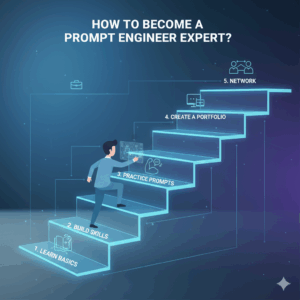
Educational Foundation: While formal degrees aren’t always necessary, backgrounds in linguistics, communication, computer science, psychology, or technical writing provide excellent foundations. Many successful prompt engineers come from diverse fields including teaching, content creation, and customer experience design.
Essential Skills to Develop:
Learning Resources: Numerous online courses, bootcamps, and certification programs now focus specifically on prompt engineering. Platforms like Coursera, DeepLearning.AI, and specialized AI education providers offer structured learning paths. Additionally, hands-on experimentation with AI platforms remains one of the most effective learning methods—many successful prompt engineers are largely self-taught through systematic practice.
Building a Portfolio: Demonstrating practical skills matters more than credentials. Aspiring prompt engineers should document their work, showcase before-and-after examples of prompt optimization, contribute to open-source prompt libraries, and share insights through blogs or social media to establish expertise.
Networking and Community Engagement: Active participation in AI communities, prompt engineering forums, and industry events helps professionals stay current with emerging techniques while making valuable connections that can lead to opportunities.
The broader AI job market context reveals why prompt engineering represents such a significant opportunity. The World Economic Forum’s Future of Jobs Report projects that AI and machine learning specialists will be among the fastest-growing roles through 2027, with 40% of companies planning to expand their AI workforce. Within this growth, prompt engineering occupies a unique position—it’s simultaneously:
Industry projections suggest that by 2030, prompt-related skills will be as fundamental to professional competence as email literacy is today. While “prompt engineer” may evolve as a job title, the underlying skills of effective AI communication will remain essential across countless roles.
Prompt engineer experts represent more than just another tech job—they embody the future of human-AI collaboration. As organizations worldwide recognize that AI success depends as much on effective communication as on technological capability, the professionals who master prompt engineering will find themselves at the center of digital transformation initiatives across industries.
Workflexi connects businesses with skilled prompt engineer experts and helps professionals discover exciting AI career opportunities. Whether you’re looking to hire specialized talent or advance your own AI career, our platform provides the connections and resources you need. Visit Workflexi today to find or become part of the future of AI jobs.
A prompt engineer expert designs, tests, and optimizes instructions (prompts) for AI systems to produce accurate, relevant outputs. They bridge human intentions and AI capabilities, ensuring systems like ChatGPT and Claude deliver consistent, high-quality results across business applications.
Demand stems from organizations needing specialists who can maximize AI investments. With 400% year-over-year job growth and McKinsey projecting $2.6-4.4 trillion in potential value from generative AI, businesses recognize that effective prompt engineering is essential for realizing AI’s business benefits.
Prompt engineer experts earn between $90,000 and $250,000 annually depending on experience, specialization, and location. Senior specialists with proven track records optimizing AI systems for enterprise applications command premium compensation reflecting the critical nature of their expertise.
Essential skills include natural language understanding, systematic testing abilities, clear technical communication, creative problem-solving, and knowledge of AI ethics. Technical familiarity with AI platforms and frameworks helps, though linguistic precision and strategic thinking are equally important.
Yes, prompt engineering skills will remain valuable long-term even as specific tools evolve. The fundamental ability to communicate effectively with AI systems will become increasingly essential across roles, making these skills as foundational as digital literacy is today.
Technology companies, marketing agencies, healthcare organizations, educational institutions, financial services, customer service operations, and content creation businesses actively hire prompt engineers. Demand spans virtually every industry implementing AI-driven solutions.
Workflexi connects skilled professionals with businesses seeking prompt engineering expertise. Our platform features verified opportunities, facilitates direct connections with hiring organizations, and provides resources for building your AI career. Whether seeking freelance projects or full-time positions, Workflexi simplifies your job search.
Why Take Up Gigs/Part-time Jobs Alongside Your Full-time Job? The job market is constantly changing and evolving. People are prioritizing their financial stability and independence over everything. The previous culture of hustling and putting in more and more hours every…

A prompt engineer expert should understand prompt design, context management, output formatting, testing and evaluation, task decomposition, and the limitations of different AI models. They should also know basic API and tool-calling concepts so prompts can be used in automated…

A machine learning expert should know Python, core statistics, machine learning algorithms, data preparation, and model evaluation. Framework knowledge TensorFlow, PyTorch, or Scikit-learn depends on whether the project needs deep learning or simpler, structured-data models. No single tool defines expertise;…

AI is changing freelance data analyst work by automating repetitive tasks like data cleaning, SQL query writing, and first-draft reporting, while increasing the value of skills AI can't easily replicate business context, data validation, and client communication. AI is unlikely…